

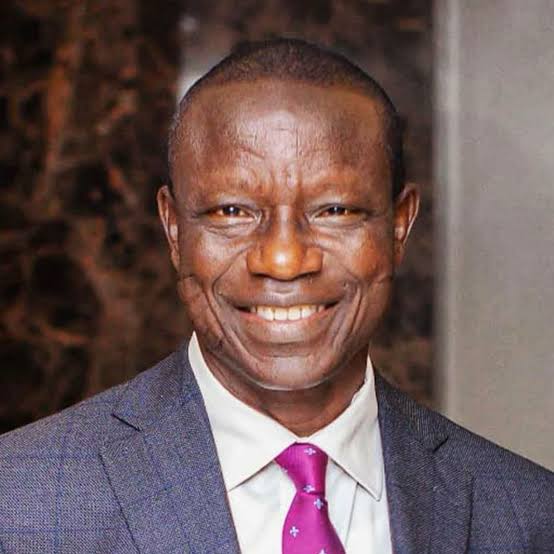
The President of the Pentecostal Fellowship of Nigeria (PFN), Bishop Wale Oke, has thrown his support behind the Catholic Bishops Conference of Nigeria (CBCN), declaring that any attack on the Catholic bishops amounts to an attack on the entire Christian Church.
Speaking in an interview monitored by Sunday Vanguard, Oke endorsed Cardinal John Onaiyekan’s recent warning to President Bola Tinubu that “Nigeria is bleeding,” citing killings and insecurity in several parts of the country.
“Are we not bleeding in Benue? Are we not bleeding in Southern Kaduna, Gwoza, Kwara and Oyo?” Oke asked, insisting that the bishops were merely speaking truth to power.
He condemned criticism of the Catholic bishops, stressing that Christian denominations may differ but remain united in one faith.
Oke also rejected the proposed enforcement of a N50,000 fine on bus preachers under the Federal Road Safety Commission Act, insisting that preaching the gospel in public transport should not be criminalised.
“We will rather obey God than man,” he said, threatening resistance to the provision and urging the National Assembly to focus on what he described as more pressing national issues.
The PFN president further called for Nigeria’s withdrawal from the Organisation of Islamic Cooperation (OIC) and demanded a review of the 1999 Constitution, which he alleged favours Islam.
However, Pastor Seyi Osuntayo of The Apostolic Church, Igbein Area, took a different position, cautioning Christian leaders against turning their platforms into political battlegrounds. He said the Catholic bishops’ intervention could be perceived as partisan, particularly with the 2027 election approaching, and urged Christians to pray for leaders rather than engage in political confrontation.
Journalist and author Ben Charles-Davies, however, disagreed, describing the Presidency’s response to the bishops as an attempt to divert attention from Nigeria’s worsening socio-economic conditions.
He argued that the bishops were expressing the concerns of ordinary Nigerians over poverty, insecurity, inflation and declining public services.
A speaker and entrepreneur, Ugoji Maximillian, offered a more political interpretation, accusing the Catholic hierarchy of having considerable political influence and suggesting that its criticism of the administration was partly rooted in its political differences with President Tinubu.
Former Lagos State Commissioner for Physical Planning, Toyin Ayinde, meanwhile, urged Nigerians to acknowledge what he described as economic improvements under the present administration. He argued that Nigerians often expect rapid results from government reforms and are too quick to condemn rather than contribute constructive solutions.
The divergent views highlight the growing debate over the role of Christian leaders and religious institutions in holding government accountable while avoiding partisan political engagement.
