

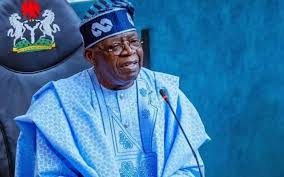
President Bola Tinubu has hailed the World Bank’s latest Nigeria Development Update, describing it as proof that his administration’s economic reforms are paying off with a stabilizing the economy and reducing poverty.
In its October 2026 report, called ‘Beyond the Federal Purse: How Higher Revenues Reshaped State Priorities’, the World Bank noted that Nigeria’s poverty rate has held steady for the first time since 2019, with GDP growth rising to 4.2% in the first half of 2026 despite global shocks.
In a statement released by Presidential spokesman, Bayo Onanuga, “the report showed that the reforms were delivering results and putting the economy on a firmer footing for sustained growth”.
Key highlights of thereport include external reserves climbing to $53.8bn by August 2026, current account surplus hitting $12bn, up from $8.6bn a year earlier, Federation revenues up 69% between 2023 and 2025, boosting state capital spending by 151% and Debt‑to‑GDP ratio projected to fall to 38.1% in 2026.
Tinubu said “tough decisions such as the subsidy removal, forex unification, and stricter fiscal discipline, have raised revenues, stabilised the economy and created fiscal space for investment in people.”
He pledged to expand cash transfers already reaching 10 million households, accelerate compressed natural gas rollout, and improve agriculture, healthcare, and education under the Renewed Hope Agenda.
Urging states to spend their higher revenues wisely, Tinubu commended the Economic Management Team, governors, and stakeholders for driving reforms. “The best is yet to come under Renewed Hope Agenda 2.0,” he assured Nigerians.
