

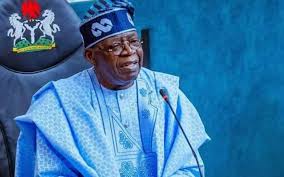
President Bola Ahmed Tinubu has approved a ₦3.3 trillion payment plan to clear long-standing debts owed to power generation companies (Gencos) and gas suppliers (Gascos), in a bid to ease Nigeria’s persistent electricity sector liquidity crisis.
According to the presidency, the approval followed a final verification of obligations accumulated between February 2015 and March 2025 under the Presidential Power Sector Financial Reforms Programme.
Officials say the intervention will boost cash flow across the electricity market, enabling Gencos and gas suppliers to recover from years of delayed payments that have undermined generation capacity and weakened overall system performance.
The sector’s financial strain dates back to the 2013 privatisation, where Gencos sold power to the Nigerian Bulk Electricity Trading Plc (NBET), which in turn supplied distribution companies (Discos). Chronic under-collection of revenue by Discos—caused by poor metering, energy theft, and weak tariff enforcement—meant only a fraction of invoices were settled, forcing government subsidies.
Further complicating matters, electricity tariffs have remained below cost-reflective levels due to political sensitivities, leaving NBET unable to meet its obligations. Gencos estimate outstanding debts at about ₦6 trillion.
The liquidity crunch has cascaded across the value chain: Gencos struggle to maintain plants or pay gas suppliers, while gas producers restrict supply over fears of non-payment. This has worsened outages, eroded investor confidence, and forced businesses and households to rely on costly self-generation, driving inflationary pressures.
Presidential spokesman Bayo Onanuga confirmed that the ₦3.3 trillion settlement represents a “full and final resolution” of the debts. Fifteen Gencos have already signed agreements covering ₦2.3 trillion. The government has raised ₦501 billion to begin payments, with ₦223 billion already disbursed.
The presidency expressed optimism that stabilising cash flow will improve electricity supply to homes and businesses. Tinubu commended stakeholders for their cooperation and announced that a second phase of reforms will begin later this quarter.
Special Adviser on Energy, Olu Verheijen, said the initiative is not just about debt clearance but about restoring confidence in the sector. She highlighted ongoing reforms including metering programmes and service-based tariffs that link pricing to supply quality.
Verheijen stressed that reliable electricity is critical for job creation and economic growth, noting that the government is prioritising power access for businesses and industries.
Nigeria’s installed generation capacity is about 13,000 MW, but actual output rarely exceeds 4,000–5,500 MW due to gas shortages and grid instability. Transmission capacity is around 8,000 MW but frequently constrained, while distribution companies collect only 60–70% of billed revenue, with losses exceeding 40% in some networks.
